

In the Medicare insurance business, providing exceptional value to clients is paramount for success. With evolving customer expectations, shifting technology, and a market that grows more competitive each enrollment season, insurance agents must continuously refine their approach to customer service in order to retain existing clients and attract new ones.
Here we’ll explore ten effective strategies to improve the value you offer to clients in your Medicare insurance business. Whether you’re a seasoned agent or just starting in the industry, implementing these strategies can help you elevate your service and stay ahead of the competition.
1. Understanding Client Needs and Preferences to Increase Value
To provide value to your clients, it’s essential to understand their unique needs, preferences, and pain points. Conducting thorough client assessments and actively listening to their concerns can help you tailor your services to meet their specific requirements and enhance customer experience.
By taking the time to understand your clients’ goals and objectives, you can offer personalized solutions that address their individual circumstances and enhance your customers’ overall experience. A client who recently lost employer coverage has different priorities than a client comparing Medicare Advantage plans during the Annual Enrollment Period, and recognizing that distinction early builds a stronger foundation for the relationship.
Building Client Profiles That Reflect Real Circumstances
Rather than relying on a generic intake form, consider documenting specifics such as current prescriptions, preferred physicians and hospital networks, and any supplemental benefits a client values, such as dental or vision coverage. This level of detail allows you to make recommendations that are grounded in the client’s actual situation rather than a standard sales script.
2. Leveraging Medicare Advantage Plans
Medicare Advantage plans continue to represent more than half of all Medicare enrollees nationally, and that share has only grown in recent years. These plans offer an alternative to traditional Medicare coverage, providing additional benefits such as prescription drug coverage, vision care, dental services, and often additional wellness benefits.
By educating your clients about the advantages of Medicare Advantage plans and helping them navigate their options, you can enhance the value you provide and improve their healthcare coverage. Staying informed about changes to Medicare Advantage plans, star ratings, and enrollment periods positions you as a trusted advisor and resource for your clients, rather than simply someone processing an enrollment form.
3. Providing Exceptional Customer Service
Exceptional customer service is the cornerstone of a successful Medicare insurance business. Promptly addressing client inquiries, resolving issues effectively, and providing ongoing support are essential for building trust and loyalty.
By investing in customer service training for your team and implementing efficient support systems, you can ensure that your clients feel valued and supported throughout their healthcare journey, not only during the initial enrollment conversation. This consistency is also what eventually drives referrals. For a deeper look at how strong service translates into new business, see our guide on Maximizing Medicare Referrals: A Marketing Guide for Insurance Agents.

4. Offering Personalized Communication
Personalized communication is key to excellent customer service and maintaining strong relationships with your clients, keeping them engaged with your business. By segmenting your client base and tailoring your communication strategies to their preferences, Medicare agents deliver relevant information and offers that resonate with senior needs.
Whether through email newsletters, social media updates, direct mail campaigns, or website comment follow-up, personalized communication helps you stay top-of-mind with your clients and reinforce your value proposition and enhance member satisfaction. For a closer look at how to structure segmented email communication effectively, see our article on Unleashing the Power of Medicare Email Marketing.
Determining the Right Communication Cadence
Personalization isn’t only about content, it’s also about timing. Reaching out too frequently can feel intrusive, while too little contact allows clients to forget about you entirely. Our guide on How Often Should Medicare Agents Follow Up With Prospects covers recommended cadences for both prospects and existing clients.
5. Educating Clients About Medicare Options
Many Medicare beneficiaries may not fully understand their Medicare options or the benefits available to them. As an insurance agent, part of your responsibility is to educate your clients about their coverage options, enrollment periods, and rights under Medicare.
Hosting educational seminars, workshops, or one-on-one consultations can empower your clients to make informed decisions about their health plans and ensure they receive the benefits they’re entitled to per their Medicare plan. Content marketing plays a considerable role here as well. Our article on Mastering Content Marketing for Medicare Insurance Agents outlines how blog posts, guides, and video content can extend this educational effort well beyond a single conversation.
6. Staying Informed About Regulatory Changes
The healthcare landscape is constantly evolving, with regulatory changes and updates impacting Medicare insurance policies and procedures each year. Staying informed about changes to Medicare guidelines, compliance requirements, and industry trends is essential for providing accurate and up-to-date information to your clients.
By investing in ongoing training and professional development, you can stay ahead of regulatory changes and position yourself as a trusted advisor in the Medicare insurance market, rather than someone clients need to double-check.

7. Utilizing CRM Systems Effectively
Customer relationship management (CRM) systems remain one of the most valuable tools available for managing client interactions, tracking leads, and streamlining administrative tasks. A well-implemented CRM does considerably more than store contact details. It allows agents to track plan changes, automate reminders, and keep marketing campaigns consistent throughout the year, not only during enrollment season.
By leveraging CRM software effectively, you can centralize client data, automate routine processes, and provide personalized service at scale. From tracking client communications to analyzing sales performance, CRM systems enable you to optimize your operations and deliver a seamless experience to your clients. For a detailed comparison of platforms built specifically for this industry, see our guide on The Best CRM and Email Tools for Medicare Agents.
Choosing Between General and Medicare-Specific CRM Platforms
Not every CRM is built with Medicare compliance and workflows in mind. General-purpose platforms can work well for basic contact management, but Medicare-specific systems often include built-in compliance safeguards and plan-tracking features general CRMs lack. Our article on Must-Have Tech Tools for Medicare Insurance Agents breaks down several options worth considering, along with how they integrate with broader marketing efforts.
8. Building Brand Loyalty Through Informative Content
Creating informative and engaging content is a powerful way to build brand loyalty and position yourself as an industry expert. Whether through blog posts, whitepapers, or educational videos, providing valuable content that addresses your clients’ concerns and interests can help you establish credibility and trust.
By sharing informative content regularly, you can demonstrate your expertise, stay top-of-mind with your clients, and attract new prospects to your business. Content that answers real, specific questions, rather than generic overviews, tends to build the strongest and most lasting trust with a senior audience.
Reviews as an Extension of Your Content Strategy
Beyond original content, client reviews and testimonials serve a similar trust-building purpose. Prospective clients frequently research an agent online before ever picking up the phone, and a visible track record of positive reviews reinforces the credibility your content has already established. Our article on Building Trust: The Importance of Google, Yelp, and Other Online Reviews covers how to build and showcase this kind of social proof effectively.
9. Fostering Client Engagement Through Webinars
Webinars are an effective way to engage with your clients, educate them about relevant topics, and showcase your expertise. Hosting regular webinars on subjects such as Medicare updates, plan comparisons, or changes to the Annual Enrollment Period can provide valuable insight to your clients while positioning you as an accessible, knowledgeable resource.
By encouraging participation and soliciting feedback, you can create a sense of community among your clients and strengthen their loyalty to your business. Many agents now pair live webinars with recorded, on-demand versions, allowing clients who cannot attend live sessions to still benefit from the content on their own schedule.

10. Embracing Digital Tools and AI-Driven Automation
Client expectations around communication and responsiveness continue to rise, and technology has become central to meeting them. Rather than framing this shift around any single past event, it’s more useful to think of it as an ongoing evolution in how Medicare beneficiaries prefer to research, communicate, and make decisions.
Telehealth and Digital Access
Telehealth has become a standard part of the healthcare landscape, and many Medicare Advantage plans now include telehealth benefits as a core feature rather than an add-on. Educating clients on how to access and use these benefits is now a routine part of strong customer service, not a special accommodation.
AI and Automation in Client Communication
Artificial intelligence tools have expanded what agents can do to maintain consistent, personalized communication without adding hours of manual work each week. From automated appointment reminders to AI-assisted lead scoring that helps prioritize which clients need a follow-up call first, these tools allow agents to serve a larger book of business without sacrificing responsiveness. Our article on AI & Automation in Medicare Marketing covers how these tools fit into a compliant Medicare marketing and service strategy.
Looking Ahead
The pace of change in Medicare marketing and client communication shows no sign of slowing. Agents who stay current with emerging tools and platforms are better positioned to deliver consistent, high-quality service year over year.

Key Takeaways
- Understand your clients’ needs and preferences to tailor your services effectively.
- Educate your clients about Medicare options and help them navigate their coverage choices.
- Provide exceptional customer service to build trust and loyalty with your clients.
- Offer personalized, well-timed communication to keep your clients engaged and informed.
- Stay informed about regulatory changes and industry trends to provide accurate information.
- Utilize a Medicare-appropriate CRM system to streamline operations and deliver personalized service at scale.
- Create informative content and cultivate visible reviews to establish credibility and attract new clients.
- Foster client engagement through webinars and other interactive events.
- Embrace telehealth access and AI-driven automation to serve clients more consistently and efficiently.
- Continuously evaluate and refine your strategies to meet the evolving needs of your clients.
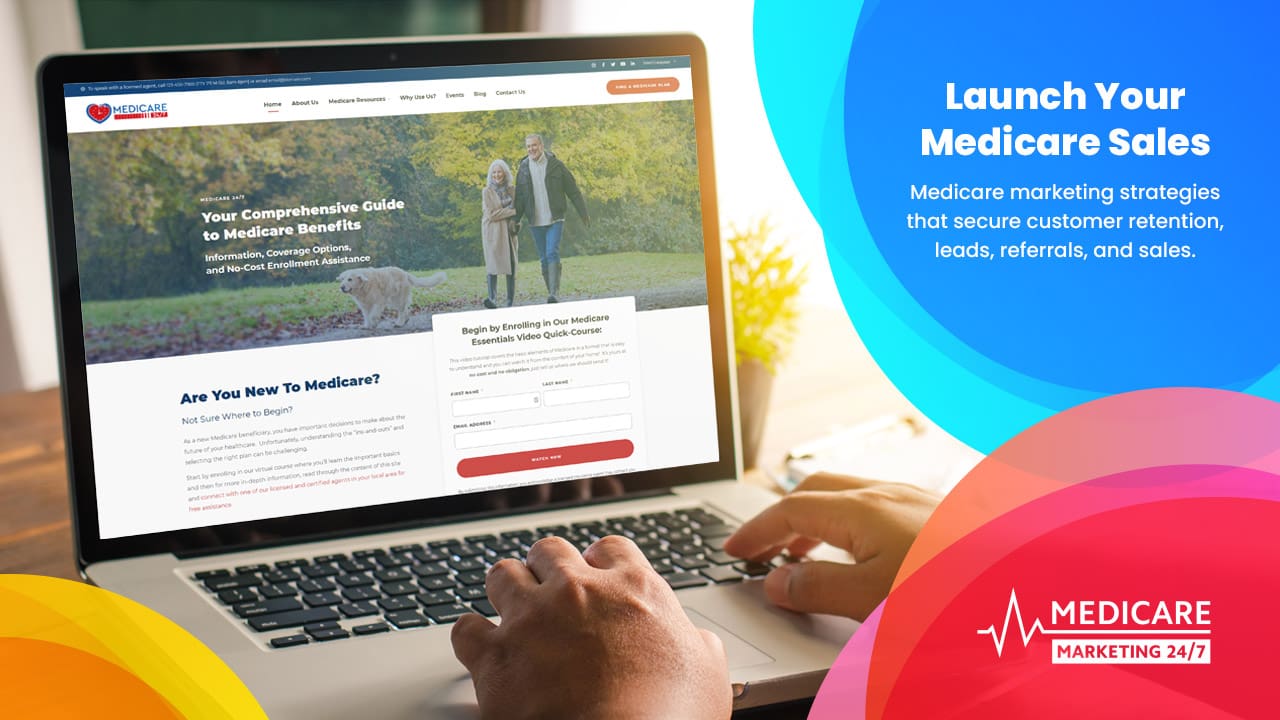
Medicare Marketing For Exceptional Customer Service
At Medicare Marketing 24/7, we have the platform to support your Medicare insurance business and improve the client experience, building loyalty and trust.
Your website presence and social media strategy are among the most effective tools for your business success. We can get you up in running in a few simple steps and just a matter of days.
Feel free to contact us any time with questions. We look forward to helping you add value to your clients’ lives and reach your business goals.